Translation Services Edison
Translation services Edison for household and employment records
Translation services Edison is a remote document translation request for households and businesses in Edison, New Jersey. The township sits in Middlesex County, and most files we receive from this area are family or employment records: birth and marriage certificates, school mark sheets, experience letters and bank statements. The process starts with the document, not with a price list. You send a scan or a clear phone photo, name the language pair, and say which office will read the translation. We review the pages, confirm what is legible, and send a written translation services Edison quote that separates translation from review. Acceptance is decided by the receiving office, not by us.
Documents in this field often follow a standard format that has evolved over years of practice. A contract, a filing, or a report may have a structure that the receiving office expects to see, with numbered sections, defined terms, and signature blocks in fixed positions. The translator preserves this structure so the English version can be read in the same order as the original. When the source document deviates from the standard format, the translator notes the deviation rather than correcting it, because the deviation may be intentional.
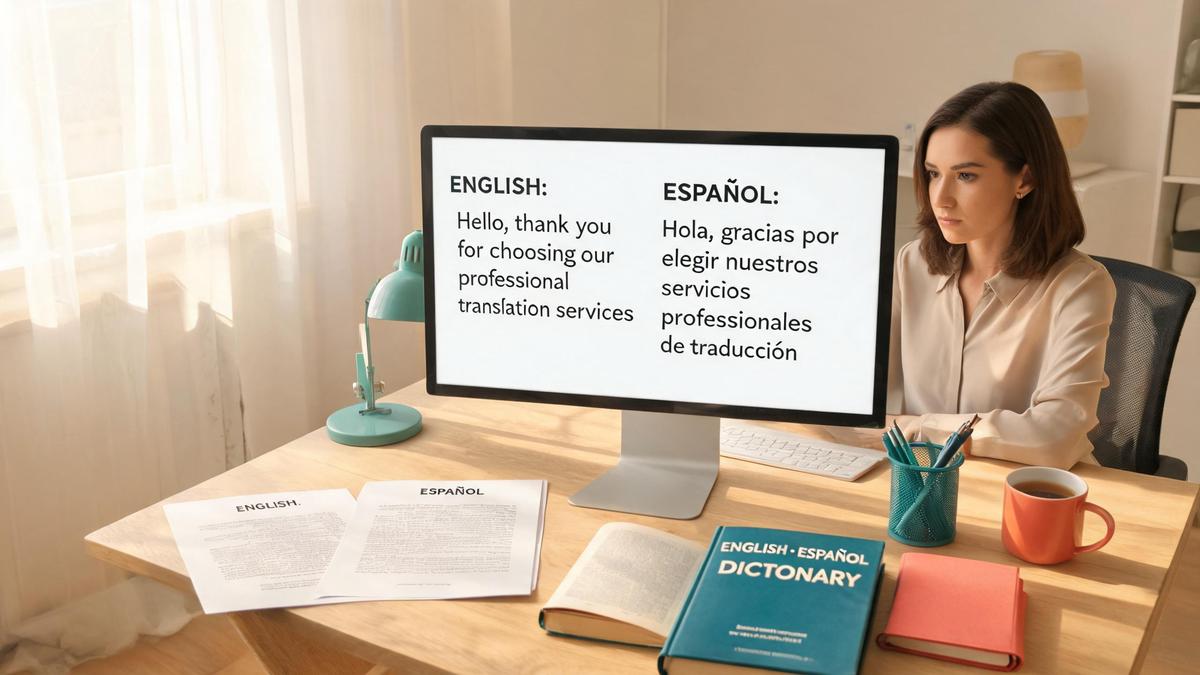
Which documents translation services Edison requests usually cover
The usual list is short and practical.
Birth certificates, marriage and divorce records, school and college mark sheets, transfer certificates, diplomas, employment and experience letters, salary slips, bank statements and powers of attorney account for most requests. A certified translation services Edison request often adds a second document that proves the first: a name-change record beside a marriage certificate, or an employer letter beside a salary slip.
Send every page that carries a name, date, number or seal. If a document is two-sided, send both sides. If you are unsure whether a page matters, include it and let the review decide; removing a page is easier than reconstructing one later.
The work begins with a review of the source file. The translator checks that every page is legible, that the language pair is confirmed, and that the receiving office's requirements are known before the quote is issued. This first pass often surfaces questions: a page is missing, a seal is partly illegible, the file is in two languages and only one was mentioned. Resolving these questions before translation starts prevents the delays that come from a file being returned for clarification halfway through the work.
Regulated industries impose requirements that go beyond the translation itself. A document may need to be certified, notarised, or accompanied by a statement of accuracy before it can be filed. The translator knows which requirements apply to which document and tells the client what is needed before the work starts. When a document is filed with a government office, the receiving officer checks that the translation meets the format requirements as well as the content requirements, and a translation that is accurate but incorrectly formatted can be returned for revision.
Related on this site:
Common questions
- how much does translation services edison cost
- how long does translation services edison take
Choosing scope before a translation services Edison quote
Scope is decided by three answers: what the document is, who will read it, and what format the receiving office expects.
A school registrar may want a plain translation of a transcript with the grading scale explained; a mortgage lender may want the account holder's name and address shown exactly as they appear on a statement.
Tell us the office and the purpose in the first message. Our document translation services follow one route for every file, but the delivered layout changes with the reader.
A translation services Edison quote states the page count, the language pair, the format and the review step, so you can compare it with another quote on the same terms.
Once the scope is confirmed, the translator works through the document in order, keeping a record of terms, names, and formatting decisions. The first draft is then set aside for a review pass, where a second reader checks the translation against the source. This double-check is the point at which most errors are caught: a name spelled two ways, a date that does not match the source, a paragraph that was summarised when it should have been translated in full.
Confidentiality is a standing obligation in this field. A translator who works with contracts, patents, or medical records sees information that is not public, and the work is covered by a confidentiality agreement that survives the end of the engagement. The translation is delivered through a secure channel, and the file is kept only for the period stated in the data retention policy. When a client asks how the information is protected, the answer covers the storage, the transmission, and the disposal of the file.
What certified means for a file sent from Edison
A translation that will be filed with an official body goes through a second review before delivery. The reviewer checks names, dates, numbers, and seals against the source, and confirms that the English reads as a document rather than a summary. This step catches the errors that automated tools miss: a transposed digit in a date, a missing middle name, a seal that was described but not translated. The review adds time to the schedule, but it is the reason a certified translation survives scrutiny by a court, a university, or a government office.
The work begins with a review of the source file. The translator checks that every page is legible, that the language pair is confirmed, and that the receiving office's requirements are known before the quote is issued. This first pass often surfaces questions: a page is missing, a seal is partly illegible, the file is in two languages and only one was mentioned. Resolving these questions before translation starts prevents the delays that come from a file being returned for clarification halfway through the work.
Related questions
- do you offer translation services edison
- what is included in translation services edison
Format and layout of the delivered file
Format follows the source. Tables stay tables, columns keep their order, and a seal is described in square brackets where the image cannot be reproduced. Handwritten names are transcribed as written, with a note when the spelling is uncertain. Page numbers in the translation match the source pages so a clerk can place the two files side by side. If the office asks for a specific layout, such as the translator's statement on a separate page or the translation bound with a copy of the source, say so before the quote. Layout requests that arrive after delivery may need a new file, not a small edit.
The finished file is delivered in the format the receiving office accepts. Some offices want a PDF that mirrors the source layout; others accept an editable Word document or a plain text version for their own records. The delivery message names the source file, the language pair, the page count, and the date, so the recipient can match the translation to the request without opening the file. When the translation is delivered by email, the message also states whether a signed statement of accuracy is attached and what it covers.
Once the scope is confirmed, the translator works through the document in order, keeping a record of terms, names, and formatting decisions. The first draft is then set aside for a review pass, where a second reader checks the translation against the source. This double-check is the point at which most errors are caught: a name spelled two ways, a date that does not match the source, a paragraph that was summarised when it should have been translated in full.
From file to delivery for a translation services Edison job
After delivery, the file is kept for the period stated in the data retention policy. If the receiving office asks for a correction — a name that was spelled differently on the source, a date that was misread — the translator can locate the original file and issue a revised version without starting from scratch. This is one reason the quote separates translation from review: the review step creates the record that makes later corrections possible.
A translation that will be filed with an official body goes through a second review before delivery. The reviewer checks names, dates, numbers, and seals against the source, and confirms that the English reads as a document rather than a summary. This step catches the errors that automated tools miss: a transposed digit in a date, a missing middle name, a seal that was described but not translated. The review adds time to the schedule, but it is the reason a certified translation survives scrutiny by a court, a university, or a government office.
Questions this section answers
- can you provide translation services edison
- do you offer rush translation services edison
Review against the source, not against a template
Review is the part a low quote usually removes, so it is worth describing.
The second reader checks every proper name, date, amount and reference number against the source, then checks the layout: signatures, stamps, table borders and page breaks. Ambiguous words are flagged in a note rather than resolved by guesswork.
If a scan is too faint to read a digit, we ask for a better copy instead of choosing the most likely number. This matters for Edison files that travel to a school or a lender, where a mismatched date can send the file back. The review note travels with the delivery.
Terminology consistency matters more in legal and medical translation than in general text. A contract may use the same term for a party, an obligation, or a deadline across dozens of pages; the English version has to use the same English equivalent every time. A translator keeps a running term list during the work, noting each term and its chosen English counterpart. When the file is reviewed, the list is checked against the translation to catch any drift in wording.
The finished file is delivered in the format the receiving office accepts. Some offices want a PDF that mirrors the source layout; others accept an editable Word document or a plain text version for their own records. The delivery message names the source file, the language pair, the page count, and the date, so the recipient can match the translation to the request without opening the file. When the translation is delivered by email, the message also states whether a signed statement of accuracy is attached and what it covers.
Remote delivery, and keeping the file usable
Delivery is remote. We return the translation by email or a download link in the format agreed in the quote, usually a PDF for filing and an editable file only when the receiving office asks for one. There is no counter to visit and no appointment to book. If you need a paper copy, print the PDF; the signed statement travels with it. For multi-page files we keep the page order of the source and name the file after the document, not after the client, so it is easier to attach to an application. If a download link expires, write to [email protected] with the job reference.
A translation that will be filed with an official body carries a statement of accuracy that names the source file, the language pair, and the date of completion. The statement is signed by the translator or by the company, and it confirms that the translation is a complete and accurate rendering of the source. When the receiving office asks what the statement covers, the answer is precise: it covers the translation, not the authenticity of the source document, and it does not guarantee that the office will accept the filing.

Further questions
- is the translation services edison certified
- how do I get a translation services edison quote
What this service can and cannot confirm
Some requests are outside the scope. We do not certify that a document is authentic, we do not amend a record, and we do not advise on immigration or legal strategy.
We translate what the page says, including a stamp or a handwritten note, and we say when a page cannot be read.
Language pairs are confirmed before the quote; if you are unsure what language a document is in, send the first page and we will identify it. Lingomere provides new york translation services remotely across the region, including Middlesex County, but there is no Edison office to visit. The quote and the delivery both arrive by email.
The review step is where most errors are caught. A second reader checks the translation against the source without looking at the first translator's notes, so the check is independent rather than a confirmation of the first reader's choices. The reviewer looks for names that are spelled two ways, dates that do not match the source, numbers that have been transposed, and paragraphs that were summarised when they should have been translated in full.
Related on this site:
Questions about translation services in Edison
How much do translation services Edison cost? The price depends on page count, language pair and layout; send the file and we return a written quote. How long does a translation take? Timing depends on the document and the queue; the quote states the delivery date we can commit to.
Is the translation accepted by USCIS? Acceptance is decided by the agency receiving the file; we attach a signed statement of accuracy. Do you handle scanned documents? Yes, if the scan is readable; faint pages may need a better copy before quoting.
Which languages do you support? Tell us the source and target pair; common pairs include Spanish, Chinese, Hindi, Gujarati and Portuguese.
Can I get a quote online? Yes. Send the file or the page count through the quote form. What should I send? Every page with a name, date, number or seal, plus the name of the receiving office.
Every industry has its own vocabulary, and a translator who works in that field learns to recognise the terms that carry legal or technical weight. A word that seems ordinary in general English can have a precise meaning in a contract, a patent, or a medical report. The translator's job is to find the English term that carries the same precision, not to substitute a looser word that reads more naturally. When a term has no exact equivalent, the translation explains the concept rather than approximating it.